Thursday, May 10, 2007

Are you Priced Out?


Struggling to buy your first home? Next rung of the property ladder moved out of reach? Not prepared to over-stretch your finances just for the sake of buying? You are not alone . . .

go to . . . www.pricedout.org.uk

Monday, April 30, 2007

'It's New Labour, stupid!'

Wakefield North, election address

Perhaps the defining features of contemporary UK politics, if not western politics, are the environment, current warfaring, the economy and, perhaps, identity. These features all operate independently yet are linked specifically by New Labour.

Environmentalism and climate change are mostly presented in catastrophic terms, yet combative measures seem piecemeal and mainstream proponents tend to lead a life of hypocritical luxury whilst exhorting restraint and a contented peasantry for the many. Little wonder that many are cynical.
Our daily activities and supposed selfish nature are made out to be the most destructive factors and the ongoing discussion of this has a debilitating effect - what then is the point of our going to work, raising a family and wanting a decent life if that contributes to our supposed demise?

Environmentalism does raise questions as to new ways of doing things. The current direction is one of miserabilism, negativity, increased effort and ever decreasing circles. Its whole basis is that human existence in a modern, developed form is ruinous to life and the planet itself. If it really was the case then surely it would be all hands on deck and a manning of the pumps, instead we're encouraged to reuse, recycle, make do and mend, cycle, scrimp and save.
For the sake of nature and future generations we must demand less, reign in aspiration and live a simpler life. Even though on-message scientists decry the way their findings are interpreted that hasn't stopped the government from continuing its agenda.

For society in general it means everything has to be accounted for from our rubbish to cars, holidays and homes. Rubbish has now become a major issue - voluntary recycling of dubious benefit is now giving way to a more coercive version and we can be fined for putting out the wrong sort or our bins on the wrong day.
Gone are the days when taxes paid for binmen to take the lot away and streets were regularly maintained. Instead jobs are cut at the council, a fatuous and expensive managerial layer is imposed, a voluntary layer of competing community groups is encouraged and we're expected to do more of this ourselves.

If it truly was worthwhile recycling then it would be done efficiently on a grand scale or incinerated for energy production. But no, big projects are out, as is letting machinery do the work. This seems contradictory for a modern economy but it's true worth is ideological - to guilt trip the consumer.
Perhaps it is more symbolic of the state of UK politics.

On a larger scale this affects industry, commerce, our view of humanity and involvement with the rest of the world, how we make a living and the quality of that life.
At its must fundamental is the denial that human beings can have a positive impact or cope with changes. Yet the planet has undergone many changes in its lifespan and people with far less technology coped. In fact it's technology and modernity that have allowed us to thrive; this best witnessed by the high survival rate of people in earthquakes in Los Angeles compared to those at Bam, Iran or the Indonesian tsunami.

The world will continue to change and it can only be through the greater use of technology and ability to meld the natural environment that we can hope to continue prosperity now and for future generations. Much play is made of our impact yet just 2% of landmass is urbanised ie, built upon and this out of a landmass that covers 30% of the globe. Doesn't this make a mockery of resource depletion and overpopulation?

Many have become entirely cynical about the political process as new scares and initiatives are constantly launched and politicians get on the bandwagon. So much to the point they are largely left to their own devices. The promotion of this agenda is dangerous if left unchecked and it remains by default. Despite belatedly recognising its inherent contradictions this has proved too problematic - New Labour's programme is riddled and Blair at his most triumphant was revealed as empty and exhausted. Perhaps not too surprising the rest of the mainstream chose not to attack but to occupy the same ground.
The danger is this encourages an outlook of fatalism and entrenchment just as Britain's elite try to revitalise the economy and standing in the world. In fact UK politicians are at the forefront of promoting the environmentalist message at home and abroad.

If the planet is not safe in our hands then we also need guidance in our daily lives. Our convenience and quality of life is being determined by government and subordinated to nature. This in schemes to limit private transport and mobility to cramped and expensive housing and lack of investment in infrastructure.
How we relate to each other as individuals is officially subject to behaviour and speech codes, we have a tick list achievement chart for babies, contradictory and puritanical advice as to the food we should eat, smoking bans and alcohol restrictions and further increases in state intrusion.
The informal and private sphere is losing out as surveillance and regulation become the norm; surveillance in the form of increased officialdom and gathering of information to CCTV and pilot schemes where 'responsible' teenagers watch the public and bark out orders via public address.
This is a chilling and apt metaphor for Blair's legacy - not so much nanny statism as ill conceived politics of an authoritarian school prefect.

If the enforcement side of politics is bad then it has an equally dismal encouraging side where model citizens are to engage in government sponsored and lottery funded inclusion schemes - the irony being that monies gambled by those wishing an escape from the everyday are used to reinforce it. Even worse is the insular and meaningless heritage or arts scheme used for this - ex MP for Wakefield, Dave Hinchliffe tried to steal Robin Hood from Nottingham until reminded that promoting an outlaw didn't ride well with current ASBO culture. Now we have the promotion of Wakefield as part of the Rhubarb triangle - a food originating in the far east.
Such is the condescending nature of regeneration schemes, the promotion of a sense of place and a pick and mix attitude to establishing cohesion.

This is the 'white side' of multiculturalism - a clumsy attempt to pigeon-hole groups of people to stereotype. Multiculturalism only favours officialdom whereas for everyone else it's a straitjacket that harnesses division. It affects how we view ourselves and others and suspends universal traits. In truth we find common desires and benefits in new influences. Today though, community groups have to meet strict criteria regards diversity, 'inclusion' or the environment to receive funding. In this way the government implants its own view as to the type of people we should be and free association, speech and thought - the right to challenge ideas and criticise becomes curtailed.
If multiculturalism is bad for newcomers then it seems to be disproportionately aimed at the white masses. An authentic heritage is chopped and changed to produce a sterile version, attempts are made to rename Christmas; hot x buns and baa baa blacksheep are banned. On the streets we have bits of history plucked out the air and MPs travel the world to apologise for Britain's dodgier contribution to world affairs. It seems they are more happy to reinterpret the past than to address the problems we face today, and those largely of their own making.

Nowhere is this best exposed than western intervention in Iraq and Afghanistan. Unrest in the middle east comes largely as a result of continual western intervention and dealings with the likes of Saddam Hussein and the Taleban when it suited, only to turn against them when things got out of hand. The only interest western governments have is to cohere a worldview around themselves and maintain their own positions. In this they have failed miserably and these debacles are now more about them saving face.
These and subsequent interventions will only cease when western peoples rid themselves of such self seeking politicians.

The realignment of the economy is set to be more growth in lower paid service sector work, retail and tourism coupled with a higher end financial, managerial and consultancy element. This is probably the driver behind New Labour's efforts to get us all to step into line and be happy with a smaller lot. Here they attempt to lead the way in reorganising various public sector work. As well as job losses, squeezing conditions and service cuts that means passing the buck to an often ill eqipped and more expensive private sector. And all wrapped up in a legislative and bureaucratic framework
Although contradictory, patronising and ill conceived this stuff runs throughout New Labour's agenda and reveals a profound contempt for the public.

It could be argued that government attempts to encourage civility - good behaviour and decent standards - is not such a bad thing (and would be a bit more credible if they lived up to the billing) yet they realise that this comes as much from us having decent employment as to where we live. Shame then that their thinking does much to discourage a progressive view and further undermines UK design and manufacturing.
If we are ever to see genuine progress that means ridding ourselves of the sustainability agenda and social engineering and thinking anew. Decent employment and a better quality of life can be had by questioning that put before us and embracing change.

*******

This intervention may not be the norm for local elections but aims to start challenging some of the contradictions and challenges we face and attempt to turn things around.

Vote Independent!

Sunday, April 29, 2007

'Climate change: Why we don't believe it'

(Reply to New Statesman article, 23rd April)

What is annoying about these discussions is the oft holier than thou assumptions of the new righteous. It is also alarming that these ideas are becoming evermore predominant. Yet no-one with any sense denies climate change as the world has been through many dramatic changes during its lifespan.

What is still in dispute is the level of impact our actions have had. Here again though we are able to see that we can also affect such things in a positive manner should we choose. Though such a view is anathemic to those that cry out doom.

That is the main problem with environmentalism, ie. its denial of human agency as a force for good on a grand scale. Instead we get repetitive and patronising advice as to the simple measures we can take to tackle climate change - turn down the heating, reduce, reuse, recycle, use pubic transport/bicycles and trade emissions.

(Some people really ought to be hoist by their own emissions.)

According to the Royal Commission on Environmental Pollution report: Urban Environments, just 2% of the world's landsurface is urbanised/built (out of 30% land/ 70% water split). That leaves a huge expanse that is wilderness, natural, preserved or farmed and suggests we've barely scratched the surface let alone depleted resources.

Shame on you treehugger types out there for it is your outlook that will condemn future generations to the whims of nature if unchecked. Intermittent natural power supply will not guarantee controllable and deliverable energy in any amount that gives us a comfortable life (eg. see Wind power in Denmark, Dr V.C. Mason, www.countryguardian.net).

Further, without an enquiring nature and the development of complex and cheap mass produced technologies we would neither have the time nor means to have this discussion nor have been any the wiser.

I think this will prove to be a dangerous and problematic route for, particularly western, society. The UK, seemingly lacking any other credible raison d'etre, is at the forefront of promoting this. How much the UK is reliant on convincing the rest of the world to slow down is anyone's guess but what's left of UK and european manufacture can't compete against it's growing far eastern counterpart, especially if they opt to take less of a head in the sand approach.

Saturday, April 28, 2007

The British National Party gains strength?

(3rd attempt to 'have a say' at Timesonline debate.)

Your article correctly states that the BNP often reflect the concerns of a significant and angry portion of the white masses (whereas the left generally avoid confronting the same). As such they prove to be opportunistic and tail the issues of the day, albeit with their own particular twist.
Though, however odious or cranky we may find them it would be unwise to dismiss what they represent. For instance, in these days of multiculturalism (soft core apartheid) and political correctness many things have been sidelined at the prompting of authorities - everything from free speech to the banning of St George's flag, hot cross buns, baa baa blacksheep and the attempted renaming of xmas - traditional beliefs reinterpreted and repackaged.
This coupled with the promoting of 'foreign cultures' has left a lot of people angry and created the space for the BNP's brand of victim politics.
Strip away their myth take on history, dollops of bigotry and hypocrisy though and we see an underlying element of pride and standards ie. something good about Britain and what Britishness could mean.
It's a genuine shame that Griffin and co don't promote some of the better things that Britain is known for - The Industrial Revolution, significant contributions to the arts, literarture, science and medicine, exploration and so on, or even something of what our character is supposed to be - adventurous, honourable, stoic and industrious.
Sadly, these things are all very much in decline, being apologised for or addressed in contradictory terms.
This is a shame because most of the people encountered who consider voting for the BNP are hardworking, well presented taxpayers who are fed up of being ignored and often respond to the lack of resources or overcrowding message. With cutbacks in services and perceived favouring of newcomers and nowhere else to take their frustration it's little wonder that the BNP are seen as an alternative.

Nevertheless, it would be unwise to panic about this upsurge of interest as more often than not many don't fully identify with the whole package and see through the rest of it.
Even speaking to BNP supporters outside Leeds Crown Ct recently it was evident that most of their anger was directed at the Government rather than immigrants and this even more so when canvassing doorsteps.

Despite the limitations of their programme I'd argue that this positive element ought to be addressed.
Griffin hints at his limitations and reckons he can only take the BNP so far (although he cites 'baggage' - nudge, nudge, wink, wink - what politician doesn't have?). Instead, personally and politically, Griffin prefers isolation; claiming nothing special about being British other than the colour of our skin and attachment to some mud and rocks.
Nothing great about his Britain then.

This denies influence and influences from further afield and throughout history and should be no go.
Geographically it makes little sense to have borders - Scotland, for instance, once on the equator and underwater; landmass, regardless of our hyper real footprint, will alter over time. Further, it makes little sense to pursue isolationism and maintain barriers in a globalised world. The free movement and association of people ought to be celebrated.
Demographically, the UK will need a constant influx of migrant workers and we should be glad they choose to come here and partake in what Britain has to offer.

What about considering Britain as more the people and ideas of the time? I see no basis for patriotism but would feel some pride if the people of Britain turned things around.
The problem is neither the BNP or immigrants but New Labour.

Friday, April 20, 2007

Reply to constituent and public sector employee, Wakefield North ward 17.

I was very pleased to receive your letter as you have raised some issues I hold dear. However there are significant other things worthy of further discussion.
In this reply I will try to be as brief as possible but reserve the right to elaborate where I feel necessary. After all, I suppose I'm trying to be a politician - however reluctantly.

Politics, particularly in the UK, is pretty bland, uninspiring fare. It is also dangerously invasive and prescriptive to us as individuals - all our quite normal activities are open to scrutiny and increasing regulation. This forms part of the 'battleground' that is politics today. The bigger picture is The Environment; the root being that people, us, are bad.
Of course it's not all bad, the show goes on and we all go out to earn a crust.

We'd be unwise to ignore the changing ground; part of which is the happiness agenda - lowered horizons, felched history, making do and mend, scrimping and saving. Further, the government is shifting responsibility to private companies and individuals and all within a legalistic framework - Blair's true legacy.

I'm not big on economics but it seems like Brown's predictions are proving amiss. With big projects on the horizon and disastrous, costly wars we can only expect more buck passing and ill-conceived, messy private services and perhaps a government making itself redundant.

I'm no nationalist but this would also seem to be no competition to eastern economies which is likely why the UK is at the forefront of promoting this stuff.
This is a dangerous position but one that also provides an opening.

To answer your questions then -

I'm in favour of us being well rewarded for our efforts - good pay and conditions with security during times of change. That whether privately or publicly employed. We cannot operate with our heads in the sand and just be stubborn. We have to recognise change is happening and not be scared of it. I'd go further and suggest we, the workforce, push ourselves and through doing this we realise who does the work, what gets in the way and see ourselves as agents of change.

As regards public services, I question what we are getting and how it is delivered (under the limiting cover of environmentalism). Public services are now set to be more about the public doing much of the delivering and everything watched and weighed.

If people are interested in delivering a true public service then I will back that to the hilt. However, that requires an open debate and winning the public over to the possibility of being able to make a difference - the 'public' being everybody else, friends, family, neighbours, etc.
That, I believe, will be the only way to make athe beginnings of a lasting and positive change.

Monday, March 26, 2007

Letter to Mr Kojan.


(comment on draft regeneration strategy, Wakefield)

Whilst happy to see plenty of development I cannot help but be alarmed at the general form, the reasons for it and further implications.

For starters, all new housing is subject to higher density build due to land being artificially restricted rather than positively as communities of people with shared interests (and a common timetable). The latter point something our political leaders seem desperate to foster.

Instead of a natural community developing we are getting a sketchily offered, pick n mix version where privacy, individuality and free association are practically sanctioned by authority.


Our homes fulfill a number of roles yet it's hard to imagine a comfortable family life in such cramped conditions. Overclose proximity to our neighbours is bound to lead to compromise and occasional tension as our activities impinge on those of others.
In crude terms merely going to the bathroom during the night provides a dilemma over flushing and disturbing the neighbours. Granted, my house is some 100 yrs old - I just hope these new homes have decent soundproofing.

Houses built for an entirely different era need constant upgrades so there's always noisy rebuilding work going on and little peace and quiet in the neighbourhood. It's probably fair to that within 20 yrs the process will need to be repeated if occupiers haven't already started updating.

And what of normal leisure pursuits such as playing your favourite music just the way you like it or even kids playing out?

Never mind though, if our quite normal activities prove too intrusive, rest assured, we can always rely on an ASBO or CPSO to keep things quiet.


It used to be said that an englishman (or woman)'s house is his (or her) castle. It would appear not so now. Gordon Brown's prudence will cost us dear both in money and increasing intrusion into our homes. His profligacy with taxes has led to suggestions of window, patio and even 'view from your house' taxes.
It gets worse - they now want to photograph and catalogue every room in our homes. Which with some snide irony perhaps, is being introduced into Northern Ireland first.

Despite our relative wealth we get slammed by high house prices due to this restriction of land; only ameliorated by low interest rates. How long this situation lasts is anybodys guess but there have already been murmurs of trouble ahead in the economy.
Interestingly enough, the debate heard was more concerned with the lack of prison spaces to house us should we resort to criminality as a result.
No focus on decent jobs then?

Decent jobs and a better quality of life could be had by ditching the sustainability agenda and building spaciously on redundant farmland with modern services and infrastructure.

But no, Castleford MP and housing minister, Yvette Cooper, gets herself all excited at the prospect of theoretically building most, if not all, UK housing on dilapidated brownfield land at high density; aided and abetted by hubby, economic secretary to the treasury and Normanton MP, Ed Balls.
That is some double act from so called socialists.

In this way our own private space gives way to chaperoned public space replete with selective heritage features and equally meaningless but instrumental public art.

And what of transport? Private motor cars are frowned upon as unsustainable, antisocial; every regeneration plan attacking private car use and our freedom to roam. This could almost be bearable if public transport was reliable, ran an extended timetable and was user friendly.

Defra minister, Dave Miliband talks of his environment policy as being for 'a land fit for heroes'.
I can only asume he's been watching too many Disney videos.

Sunday, March 25, 2007

Drugs are for mugs?

"I saw the best minds of my generation destroyed by madness . . . " (Ginsberg, Howl )

Society does need to have an open and honest debate about 'drugs' as it is often something known about but a blind eye turned and discussed mostly in terms that avoid clarity.
For starters, everyone from royalty to politicians, to doers and makers, athletes, armed forces and aged has its share of drug takers.
So why do we do it? Possibly as much a release from or aid to the mundane as football, dancing, reading or a hobby. Some of us even become too absorbed in our work to the detriment of other things and miss out on what those things mean.

It's partly a question of balance - quality, quantity, frequency and variety.

Do we also condemn football, love, alcohol or even politics? The efforts people put into 'the beautiful game' can take those connected through every emotion, affect their well being, cost plenty and takes up plenty of time that could arguably be put to better use. And the world of sport doesn't come without significant risk in the form of injuries, hospitalisation and occasionally death. That said, the world of sport, as most other areas, is evermore subject to increased regulation.

Love is the sweetest thing? Hmm, who could honestly say that our most intimate of relationships don't come without there fair sure of turmoil, disappointment and sometimes even hatred. Some of us do crazy and irresponsible things in the pursuit of what we consider to be love. I'm not too sure we know what love is . . . .

What of politics . . . . ?

What of the abuse/misuse of drugs for 'recreational' purposes? - a significant proportion take a little of what tickles their fancy and are able to cope with life just as much as the rest. Some have their best thoughts or can see through problems that hound them through the week . . . . and, of course, many talk and do utter bollocks.
Though there are plenty of others doing the same without substance.

There shouldn't be any problem with people taking drugs as 'pick me ups/put me downs' as a matter of choice rather than, say, as prescribed by busy Doctors on a mandate not necessarily of their own choosing.
This can be illustrated by an article from The Press, a Dewsbury newspaper, headlined 'OAP drug dealers' (2005?). it appears they were selling on their prescribed medication (which oft just made them into zombies) to the local junkies (who didn't mind 'zombing') and the situation only coming to light when the usual pharmacy break-ins stopped. The medication used in this manner alleged to be more deadly than even heroin.
People go to great lengths to get their kicks, so much that to some the journey and nature of it becomes part of the deal - been there, bought the t-shirt, hat, bumper sticker and badge . . . what a rebel. But no cause.

Behind the drugs 'issue' lies the notion that people are feckless no-hopers/addicts and intrusions into our private affairs are fairgame. Yet, often people from these quarters, pursuing these lines, prove to be hypocritical. David Cameron says that politicians ought to be able to have a (previously) private life. Shouldn't we all?

Surely people should have the freedom to choose their poison without the condemnation of others? Recreational drugs may form part of what we consider to be bad about society but that can be argued is largely due to their illegality. Then there's the guilt trip aspect of the west's decadence causing impoverishment and squalor in other countries. So the likes of Kate Moss, Robbie Wiliams and others are given a derisory snort for causing the plight of Colombians.

Perhaps if the stigma attached to drug use was dropped then better drugs could be developed for all walks of life - recreational, sport and medicinal and these fields having a reciprocating nature. Advanced pharmaceutical companies could then devote less time to maintaining patents and allow production of drugs generically and cheaper abroad where they are required.

60 year old Sylvester Stallone was recently busted for possessing 'a drug containing human growth hormone somatropin, said to help muscle mass, boost the immune system and hair growth', as reported in The Daily Star, 14th March. The Star also says 'the illegal substance is used by cheating sportsmen around the world'.
Given the often short length of career in sport, its injuries and stresses a case could be made or it being an ideal testing ground for drug development.
Perhaps better treatments could be developed through sport that benefit the elderly and infirm, alleviate some of the terrible, debilitating illness that blights the lives of many; a developing ground similar to Formula One racing for the humble family motor.

What of boldly going . . . astronauts, deep sea divers, etc face different pressures and conditions, their bodies stretched or compressed and requiring something a bit more potent than aspirin.

Many drugs and treatments have their origins or development on the battlefield. This in dealing with injury - rapid advances were made in plastic/cosmetic surgery due to the high level of facial injuries resulting from trench warfare. And armies throughout the ages have used and developed more than marching powders to gain that competitive edge.

Johan Hari writes (in Prospect) of the chronic global shortage of medicinal opiates and the particularly cruel irony of this in Afghan Hospitals. This in a country where impoverished farmers are encouraged to destroy poppies and adopt poor returning agricultural schemes promoted by an oppressive force.
Surely that's criminal?

It's truly sad that the battlefield provides an arena for development rather than elsewhere. If we developed a better view of humanity - one that didn't just shoehorn us into stereotype - then those 'hippy types' that huff n puff or others that see hedonism as the way or may be inspired to achieve in other areas . . . as well as choose their poison.

Wednesday, February 14, 2007

We need more power


Entry into www.spiked-online.com debate: The future of energy.

13 February 2007

Underpinning the current debate concerning energy useage is the contemporary notion that our activities harm the planet. In theory this extends to all our activities and, to some, our very existence. The late Tony Banks MP referred to humans as ‘the most obscene, perverted, cruel, uncivilised and lethal species ever to inhabit the planet’. Why we elect such politicians to represent us is beyond me. Perhaps that is a matter for further discussion.

I think humanity’s impact on the planet is overstated. Yes we do affect nature. However, the planet is constantly changing - Scotland was apparently once on the equator and underwater. Any mining or quarrying exposes layer after layer of previous life. Doubtless every square inch of the planet could tell the tale of its existence.

The current Western outlook, however, does not appreciate this, seeing the world as bound in equilibrium and only upset by our activities - but this is untrue. Many things affected the planet long before we stood up. On a naturally changing planet and one that is likely to experience vast changes irrespective of our presence, should we opt for a harmonious relationship with the elements or seek to make things more habitable for the only known being that can make any constructive difference?

I’m enchanted by the idea of free power in solar, geothermal heat pumps or wind power and better insulation and building materials. These things are all useful to a degree. But they are no more of a panacea than recycling our rubbish. This approach will not mean mankind lives comfortably and prospers over time.

The planet will eventually die out anyway - and what then? Does all of humanity go with it safe in the knowledge that at least we did no harm? Or do we get a grip and build on the endeavours of our forebears and develop means to cope in any circumstances? Our future descendants may naturally face greater environmental hazards than we now know; surely they would be in a better position to deal with things with an abundance of energy too cheap to meter?

Thursday, December 21, 2006

"These are a few of my favourite things . . . .

*


As development is billed as the dirtiest of words and sustainable its contemporary default l'd like to put the case for development with a capital D. Without wishing to sound alarmist the current environmentalist message is the message of the doomsayer although flies in the face of reality. People have progressed remarkably over time yet current thinking seeks to constrain that. Far worse seems to be the hatred of any solution offered and the preferred choice is to slow down (1). Maybe that suits those who have attained a level of comfort and prefer their experiences authentic but others wanting better creature comforts not so.

Call it what you will, the developing world needs better than to exist at the level of charity handout, subsistence farming, hand pump and smiley photo. Hot and cold running water, abundant electricity, decent housing, hospitals and roads wouldn't be a bad start. And we in the west ought to be able to get on with something a bit more progressive than sifting through our rubbish or living like battery tenants.

What is particularly alarming is the stranglehold that green thinking exerts everywhere. lsn't this tantamount to humanity throwing in the cloth and giving in? We uphold primitive developments such as Stonehenge, the pyramids or Machu Picchu but eschew true development today. Telling that the Incas averaged more roadbuilding than New labour (2).

We get excited when we stumble over the remains of previous human habitation - the broken pots and other earth covered remnants as to how they lived a 1000 years ago but seem to despise the current version.

There are those that say that the planet is changing because of our impact upon it and that the under-developed world suffers disproportionately, yet devastation disproportionately effects those that don't have the benefits of development.

Green thinking seeks an imagined harmony with natural forces that just don't exist in holy equilibrium. lsn't nature just a series of happenstances? Doesn't the march of history tell us we live on a planet that is constantly changing? Without advanced technological solutions we confine ourselves to wishful thinking and an ahistoric view of the world.


'You say Matterhorn, I say materials . . . '

The hills really ought to be alive with the sound of development, as do the valleys, plains and oceans. it'd be good to see a more progressive humanity, one that turns back the tide of ecodoomsayers and offers genuine solutions to what lies ahead. We ought to be gladdened that our endeavours can be seen by satellite - more of it please!


A non exhaustive (and in no particular order) list of my favourite things -

Kirk Leech presents an excellent website concerning the row over true development at Rosia Montana, Romania. It seems that the greens are in full evangelical mode and want nothing but a peasant existence for the locals - how quaint. The bulk of the locals seem to have better ideas. See www.goldenmyths.comIs this worth preserving and for whom?
(A cheap holiday in other people's misery . . . )

Mirna, Siberia.


Building the 3 gorges dam.

They didn't just dig a hole at Kennecott, Utah, they mined away a mountain.


*Female astronaut courtesy of NASA.
(1)Every silver lining has a cloud. Stuart Blackman
(2)Transport innovation: slowing to a standstill. Woudhuysen, Both www.spiked-online.com>Environment
The Incas: The South American empire lasted just 100 years from 1438AD (began 1200?), and built 22,530km of road
New labour averaged 64km a year since 1997.

Saturday, October 21, 2006

One man's mince . . .

ls Peter Tatchell being a poof?

Tatchell whinged about Chris Moyles and Rio Ferdinand's interchange on Radio 1 , recently when Ferdinand disputed being a 'faggot' after saying that Peter Crouch was something of a looker (or words to that effect) then followed something of a discussion of homme et homme, etc.

One doesn't have to be gay to appreciate the merits of our fellow man in whatever shape or form. Blokes may be envious of a fellow's good fortune, see a bloke and think - 'l wish l could be something like that', etc. Blokes don't generally openly acknowledge this sort of thing as it doesn't befit the form we reckon we're supposed to adhere to - gruff, heroic, macho, etc, etc.

Butt really, does Tatchell represent the bulk of gay opinion? l doubt it - in day to day parlance people take the mick in many forms and with little of real consequence. Sure, some may take offence only to end up with egg on there faces as their colleagues rip the the piss even more - pretty much par for the course. lf we were to take offence at every sleight presented then we probably wouldn't get through our day.


Peter Tatchell was supposed to be appearing at the Battle of ideas (see below), Chris Moyles perhaps not.
(prev unpublished)

Wednesday, September 20, 2006

Open reply to Green taxes letter, Wakefield Express.

David Speight presents some good argument for scrapping green taxes.
l don’t own a car but see, like everyone else, the shoddy state of public transport - often overcrowded, too hot, bumpy ride and poor shelter when waiting all weathers. At 42 yrs old this presents little problem. Others not so - the elderly or those with kids in tow and shopping plus, love ‘em or hate ‘em, our blessed schoolkids. All cramped up in poorly designed buses and an inefficient network. Somehow we daily manage our way through this mayhem with muted protest. True, some are darn right disrespectful in their protests but can you really blame them? There are better ways to register complaint with our lot.

Doesn’t all the transport system need upgrading for public and private use? Many of us prefer the freedoms associated with our individual means of transport, car or otherwise. For instance in these days of DIY we couldn’t manage repeat trips to suppliers for our materials by bus. Plus of course the freedom to roam - on a whim and for pleasure.

Britain has masses of countryside and a wealth of offerings in other villages, towns and cities. Yet investment in roads is pitiful if not generally anti-motorist.
There’s a duality here in that our Townmasters seek to encourage visitors for revenue yet limit the mobilities of inhabitants (low wages, high house prices, taxes, fines and traffic schemes.) lnstead we are offered a sense of ‘place’. An identity chaperoned by selective nostalgia.

As for London’s transport system being up to the job then Mr Speight is very much mistaken. London has all the benefits and pitfalls as anywhere else but in concentrated form. Too much haphazard design and based on similar faulty logic of minimizing our footprint and sticking with an imaginary past.

It’s not just cars. All consumption is up for consideration - clothes, activities, food, socialising, holidays, energy; our daily lives and wastes.
We put so much effort into saving by products that are worthless that the whole exercise becomes one of going backwards. This stuff comes from the ground and could easily compress and go back there. Or what of machine processed separation or clean burn incineration as a power source? If there’s a case to be made for our rubbish being useful then surely it lies on the larger scale and not at the level of the individual householder.

Which ever way it is looked at retail is to feature heavily as everywhere ‘regenerates’. Yet we are set to be guilt tripped and green taxed by some pretty naive and disingenuous thinking. This from people who have often benefited the most from society’s abundance.

There is a good argument for redesign of homes as they are generally built today guided by a lack of forward thinking - nostalgia and environmentalism. There are some fantastic looking developments on the Leeds waterfront and Wakefield also making an offering. But too much crowded in. This may suit hard working, hard living city types all well and good but not so those with families or wishing peace and quiet or different lifestyle.

This overcrowding is happening everywhere. Wakefield, as well as anywhere else, is experiencing a building boom. More of a whimper given low build rates and the state of housing stock old and new.

Plots of land are being taken up and high rise and compacted dwellings abound. People are offered relatively huge sums of money to sell off their gardens for new housing. Tales abound in these parts of offers in the region of £50 - 70,000. Houses are expensive due to the cost of land, not materials or labour. High profits are generated by the demand for limited stock and our desire for a place of our own.

Good plots of land are hard to come by because of artificial restraints. Supposedly overcrowded Britain is just 10% built, 75% farming that is held back by environmentalist sentiment and 13% ‘other’.

So whilst we are constantly upgrading and patching up the old, living increasingly cheek by jowl in expensive and inefficient housing and getting taxed for the benefit of maintaining this we could actually be looking at pastures new - our out moded, subsidised and romanticised countryside.

Britain is in crying need of regeneration. Regeneration writ large and not this small scale, anal retentive stuff.

Great efficiencies and improvements in housing and living will only happen on the larger scale - at the level of town and country planning and a consideration of our place in that.
There are fantastic, easily built house types looming on the horizon and new materials and techniques that offer more. All held back by petty, contradictory convention and regulation.
These design types will make the best efficiency savings rather than small scale and expensive energy generation. Energy absorbent materials are constantly being developed and certainly have a part to play though still reliant upon the weather and thus requiring back up. Retrofitting is expensive and offers diminishing returns for intermittent power.

Why kid ourselves? A developing economy needs masses of cheap, reliable and clean energy.That can only mass generation and nuclear power. We need to ditch our aversion to the ‘big monster’ and embrace our capacity to improve all situations. l’m pretty sure that if something as inefficient as a windmill can be made elegant then something as useful as a nuclear power station can be made a thing of beauty.

This could well set the alarm bells ringing ringing with some who would believe that the country will become one big housing plot. Not really so. Better living standards seem to lead to a decrease in the size of families. This coupled with the marvelous news that we live longer (despite all our bad habits) is leading to the requirement for immigrant labour - and we all came from somewhere.

Regardless, Britain’s glory days of empire and assumed superiority are long over. We may still be an island but that is purely in geographical terms. Despite the protests of Greens and Little Englanders our destiny will always be reliant on interacting with the outside world. How can it be otherwise?

Despite maintaining something of a bargaining chip by looking both ways, the UK is part of Europe and rightly so. As well as the benefits of increased immigration to this country - new culture, outlook and determination to progress there is also opportunity abroad. Europe is a two way thing and many opportunities await the willing. Many take advantage of cheap travel and low costs abroad to set up there and why not?

Even our good friends at the BNP say (somewhere) that there should be no problem with migrant workers developing skills to take back home with them to rebuild their country. We can discern their reasons for saying so but perhaps something a bit more progressive than our green chums?
Our eastern european chums are taking full advantage of opportunities offered whilst the predominant outlook, particularly in the UK, is an entrenched one. People from developing cultures have little of the self loathing impressed upon us and are keen to develop.

We should be pleased that many choose to come to the UK out of choice. Perhaps they were attracted by our sense of tolerance and fairplay, or that Britain once stood for something to be proud of - the cradle of the industrial revolution, scientific endeavour and ingenuity. All sadly things that are out of fashion at present as the west looks backwards at its peril.

Open reply to Cllr. Roberts, Heckmondwike. (The Press (1)

l'm not overfamiliar with Cllr. Roberts stance on funding English teaching to, it's presumed he means, foreigners. But judging by your article in last week's Press he seems to want it both ways. How can you argue for the withdrawal of funding and then expect 'foreigners' to speak it as their main language? Would you argue the same for 'homegrown' kids that need their rudimentary understandings guided in the classroom? Perhaps funding and the runnings of education are further matters for discussion.

What is 'english' anyway? It does seem to be a form that can adopt others and continuously adapt itself. Spend some time checking the roots of words, their meanings and use and we find that they come from all over. This continues today and new words and expressions are always arising. Not sure whether this is the case with other languages though - l recall a welsh speaking couple sounding completely alien until hearing 'supermarket'. Likewise Croatia's Franjo Trudjman coming out with 'device for holding up trousers' when divorcing Serbo-Croat.

l take the point that English should be the main language when used in this country. This is even established in much of global trade and in diplomatic circles, having replaced French.
But what of when we 'Brits' go abroad? How many of us speak the lingo? Erm . . . ? not many. Even when some of us do make the attempt we find our efforts appreciated but generally our continental counterparts speak more than adequate english, french, spanish, etc. This seems to be even more so at the lower end of the jobs market. I wouldn't put myself high up the pecking order but have often been embarassed by those of lower 'status' who demonstrate command of many languages and myself struggling with the basics.

Bloody tourists, eh?

l'd counter Roberts' point about a reluctance on the part of others to learn and say it's more one of traditional resistance to the 'other' in this country. Compounded today by the multicultured approach to societal realtions accepting the 'other' as 'always other'.

Given Cllr. Roberts leanings it's presumed that his bottomline is 'they' should go home yet immigration to this country and the mobility of its occupants has always been a feature of its make up. lf any of us trace our family hisory then we find it's been a long and winding road to get to this point.
Despite geographically being an island Britain cannot be other than part of the bigger picture. We have a global economy with goods and people travelling far and wide. (The latter should be considered to be the most basic of freedoms.)

Regardless of Cllr Roberts' approach and the shilly-shallyings of mainstream politicos immigration and mobility will always make the world go around with benefits and challenges for all. lt seems that despite a wealth of cultural differences we find there are more things that bind us than not and assumptions made about people expected to conform to tradition don't actually fit the stereotype.

Maybe there are forms and nuances of expression that just don't translate via language so an understanding of other forms of expression enhances our own to the point that words or phrases become accepted, thesaurusised (made that one up) or adapted. Our understanding and language given some ad hoc je ne sais qois, so to speak.
Much can be learnt from the study of other language and culture. l profess to not having much understanding of other languages let alone script. Looking at eastern forms with odd symbols written fom right to left is incomprehensible to me but does suggest another side to learning. Perhaps the mere ability to read in this manner has an effect on comprehension and the ability to do both in many languages opens up far more than the seperation. Which ought to go without saying really.

Maybe in the future language will reflect an absorption and filtering of the lot into one common but enriched 'english' or other. Further than that though, our eastern contemporaries seem a lot less encumbered by the insularities of mainstream western thought and the world may come to speak in a modern eastern form. Somehow doubt that but Cllr Roberts may yet speak from the other side of his mouth.

(1)http://www.thepressnewspaper.co.uk/NewsDetails.asp?id=801

Wednesday, September 13, 2006

Public service Fightback!


Volunteers required . . .

The National Health Service is undergoing considerable change at present. Changes big on promise, all the right boxes ticked - but on the ground service becoming a nightmare and staff and patient care suffering.
We're sold stories of bright new shiny hospitals which are definitely needed but scratch beneath the surface and we're getting a lot of self-congratulatory hype from people whose vested interests lie elsewhere.

We face job cuts, closures and cutbacks - a diminished service replaced by one ran to quotas, an attendant bureaucracy of well paid consultancies, managers and sub managers, privatisation for the sake of it and practically a licence to print money.

In real terms these cuts are unnecessary. There is no real reason - or the reasons stated are various and incoherent. Part slap in the face and taste of things to come and part due to Labours fixation with targets.
Even in the Govts own cheesy cliche-speak of ‘best practice’ and ‘value for money’ this makes no sense as many of the services up for grabs are set to be more expensive. In fact many business analysts are baffled as to the Govts actions stating that the figures are nothing to be alarmed about. And they are a fraction of the cost of the wars in Iraq and Afghanistan.

These are the actions of an administration trying to look dynamic at our expense and reveal nothing but contempt for the public.
We are being sold short by a bunch of goons that get by on spin and hype but with no effective opposition to challenge them. People that get off on telling us we drink, smoke and enjoy ourselves too much and ram patronising and hypocritical sermons down our throats as to how we should live our lives. This is a parliament stuffed with lawyers and ‘fairplay’ rulemakers with no direction other than to see society stifled and stepping to their tune.

Whether we like it or not this period is one undergoing substantial change, much of it seemingly without direction. Changes are afoot in the economy, labour market and beyond and we can no longer afford a head-in-the-sand approach.
If we allow this period to fester with, at best, hopeful gestures and placing faith in foot-draggers and sellout merchants then they will wriggle out of it in one form or another, something else will replace it - immigration, criminality and general bad behaviour likely to the fore. Expect stories of unscrupulous care workers, scamming immigrants and general unfeeling, uncaring and self-interested behaviour. Basically, how crap we all are and that we need decisions making for us.

Too often this is where we fall down. We allow a mood to fester, individuals and groups picked off, others keep their heads down, regulations follow and we’re stuffed.

So what do we do?

Merely ask the bosses to be nice to us whilst we leave them to do their jobs? Their jobs being nothing more than to whip us into some indeterminate shape and in real terms our paymasters. ln very real terms they have little to do with actually running the health service.

Despite 'bending over backwards' to minimise the harm of cuts in the Health service it's fairly obvious that with the appointment of two new turnaround directors Mid-Yorkshire Health trust are determined to see through some nasty treatment. Therefore anything we do will have to be determined.
Health workers need to be able stick up for themselves day to day and to be comfortable that others will genuinely support them - us, the general public as users and fellow workers with an interest in our livelihoods. If we do this we prove that there is nothing to fear by making a stand.

lt’s suggested that staff adopt a policy of non compliance with unnecessary paperwork, refuse to comply with target driven initiatives that allow management to please their political masters (but do nothing for patient care) and break the 'vow of silence'. Professionalism is nothing to do with speaking out against a drop in service, in fact quite the opposite.
And no victimisation. Management and their friends will do everything they can to win this - everything from soft soaping to disciplinary action for petty reasons and more.

*
By now the current swathe of redundancy notices will have been handed out and staff worried about their livelihoods. Management have said they will do all they can to minimise redundancies yet haven’t ruled out the option as a continuing part of their plans. There shouldn’t be a single one. lf the principle of us losing jobs to save their necks is accepted then how long before one becomes 93, 450, 1100? And remaining staff carrying an increased workload.

*
Even at low levels of growth, the nation’s wealth is predicted to double over the next 40 years. Advances in medical science and practice mean more and better treatments are constantly being developed yet held back by red tape, underfunding and an aversion culture. Notwithstanding groundbreaking new technologies, today we face the rundown of essential services and health staff, effort and resources diverted into meeting quotas and targets. The results of this are well known - people are dying and losing out on basic healthcare whilst all the time we are told things are getting better.

The NHS has never been perfect and we should be clear that ‘nationalising’ it, ie. keeping it in public ownership, is a limited call. What is meant by public ownership? In truth we own precious little of it although our collective labours create it. Usually it means run by the state yet it is state policy to stitch up the NHS and private entrepreneurs are merely doing what they do best.
Further, in a globalised economy shouldn’t we be thinking of an international health service? To some extent it already is - staff, products and patients from all over the world.

*
To stand any chance of stopping the rot we need to make a determined stand and stick up for ourselves. For that we need to recognise the general nature of this battle.
No job cuts, no closures and no loss of services should be the most basic stand taken - for decent employment and a health service worthy of the name.

*
This leaflet aims to help set up health worker support groups to discuss further actions and activities. Every inch forward will be a hard fought one as despite overwhelming anger and public sympathy there is little that people believe can be done under the present circumstances.
ln the past people have been motivated into action for various reasons - good and bad. Isn’t it time that we consider something worth fighting for today - before we get caught up in events?

Health workers need support now.

*

Unison are coordinating other aspects - 01924 212335


(psf! *3)

Thursday, September 07, 2006

*A case of the shovel calling the spade a nigger?

(letter handed to Wakefield anti-fascists)

Should we be bothered by 'fascists'?

Are we to believe that the BNP and their like are a problem? Sure they have a handful of Councillors and gain a reasonable enough vote in elections but what does this mean? lsn't it the case that they merely occupy the arse end of politics adding a twist to the outpourings and actions of mainstream politics? At the end of the day these are the people with the say-so. For instance when so-called respectable mainstream politicians go on about the level of immigration or asylum seekers and pander to ideas of being overcrowded and under resourced, yet in the eyes of many do little about it, then the BNP hit home by giving a populist twist to the argument.
Let's not forget that it is state authorities that make the decisions to inter and deport people or even invade foreign countries.

White supremacist ideas may not be that strident anymore but appear in soft-core form under the guise of multiculturalism at home and humanitarianism abroad - 'we are different' still being the message. Though perhaps inverted here whereby any and every other 'culture' is promoted and home grown tradition is sanitised - though not at the request of immigrant groups.
These ideas are evolving under the pressures of globalisation yet in island Britain there is a smug remnant of complacent superiority.

The BNP's popularity is something of a myth - many decent people have voted this way purely out of anger at what they see as ineffectual politicians and not out of any support for what they stand for. Pretty much the way that most voting goes ie. loose affiliations that are acted upon every four or so years with no genuine commitment to 'the cause'. The BNP at best are seen as something that will do what they say and seemingly a logical response to problems posed by elements of the mainstream.

Perhaps we confuse the BNP with fascists from times past when these labels meant something and people had an active involvement with their political parties. Not so today - people on the whole have little faith in active involvement with politics and go along with the loose belief that voting an outfit into power can change things.

In effect the BNP are a pisspot* outfit and we do ourselves no good by campaigning against them. Surely their are bigger and better ways to operate than picking this seemingly easy target? lf we go around telling people not to have any associations with them then we only make the case that there is something remotely coherent about them.

What is good about the BNP is that they give ground level expression to ordinary every day anger and propose means to deal with problems that people perceive - however crap that may be. Most of us in our daily lives come across sentiments that the BNP echo ie, their 'ideas' are commonplace. We should relish the challenge that these arguments present as it is often here that we can make headway and build a true expression of ground level politics.

Sadly if we concentrate our fire on 'fascists' then we let the real culprits escape and they carry on reinforcing the shaky ground that the BNP occupy. Worse, if we adopt the slogan that even mainstream politicians are better than 'fascist scum' then we dig a hole for ourselves too.
Shouldn't we be a bit more daring and find ways to channel that muted anger into meaningful expression?

The left should seriously be just that little bit braver. The BNP may occasionally fight a bit dirty but they are good at it - and after a significant section of the same audience as us. They may be reactionary in some circumstances but they are at least brave enough to stick their necks out. And they do set a standard, of sorts. Can we say the same about ourselves?

"We' well outnumber 'them' yet concentrate too much effort in being scared. Turn all this around and hit the audience instead of leapfrogging it by thinking they can be won over to our cause by 'celebrity' figures. If we don't understand our arguments or at least work to principle then how do we think others can be convinced by celebrity?

l'd actually go further - we should attempt to win this lot over. Why? As mentioned before their arguments are commonplace - amongst our workmates, friends and family. If we say don't speak to the BNP then we deny their arguments can be countered - unless Sting or someone says so. If we can't counter these arguments and promote something our closest can believe in it's probably because we're not too sure of our arguments. We'll only find out by putting them to the test.

Recruit from the BNP!?!

Quite serious. Whatever their faults they do seem to believe in something and put in good effort. The days that they seem to hanker for are long gone, arguments incoherent and a just a bit hypocritical. Misguided Nazis? Hmm

If that is to be met with apoplexy the the left should at least defend - to the hilt - the BNP's right to free speech, not seek official sanction to quieten them, side step or simply deny their arguments.

Sunday, August 13, 2006

Land wanted . . . .

According to the CIA factbook (1) there are 6,525,170,264 (6.5 billion) people in the World occupying a total of 148,940,000 square kilometers of all available land (global surface total is 510,072,000 km2). Laid out as a square block this gives a grid with sides of 12,204 km. Placed on this grid we would be in 80,778 rows and 80,778 columns and each occupying 0.0228km2 (22,826m2) every man, woman and child.


This doesn't sound a lot especially as it equates to a square with sides of 0.151km, or 151 metres. For comparison, regulation football pitches range from 90 x 45m (surface area of 4050 m2 and squared off to 64m sides) to 120 x 90m (10,800 m2 and a square of 104m sides). 


In the UK with a land mass of 244,820 km2 and 60,609,153 people we get 4040m2 - equivalent to our smallest football pitch of 64m sides. Unlike the grid example, and fairly obviously, the world's population is not evenly distributed. Africans would have 50,000m2 and box sides of 224m, Australians get a third of a km2 each and box sides of 577m, Chinese have 7,097m2 with box sides of 84m and so on.


In the UK almost 85% live in England, just 12% of UK land is built/urban, 75% cultivated and 13% other. The UK is fairly densely populated as far as statistics go yet take a flight with Google's Earth programme or even a road or train journey and there is plenty of countryside. 
Even in 'overcrowded' England you can travel miles without hardly seeing a soul.
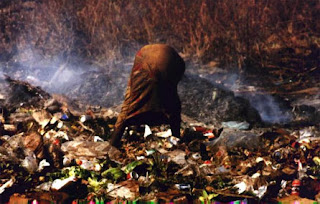

It's expected that human population on the planet will peak as development grows and living standards raise. However true this may prove to be it is frequently given as sop to shrill environmentalists, is part denial and admits that we need to put the brakes on. But what about an expansive humanity? Panics aside about a shrinking landmass and encroaching oceans but shouldn't we be thinking the more the merrier and see our progeny scattered far, wide and developed? For instance, the UN calculates that Africa could support a population of 32 billion if developed to western standards. 


' . . . lies, damned lies and statistics'


Spread out like a gas (or virus if one adheres to some contemporary views regards human beings) there is surprisingly little room for each of us. Yet, according to Alan Coren the entire population of China - 1.3 billion plus people and counting - could fit on the Isle of Wight (2). This at the rate of three per square yard. Using the same calculation then the entire global population could fit on the island of Maui, Hawaii. By 2030 it's estimated that the World's population will reach 8.3 billion and the same exercise could be held in Luxembourg (which to some could prove a good enough reason to limit population growth . . . ). Of course on the whole we would choose neither to live in isolation from one another nor could we live cheek by jowl; all the above merely being a consideration of space.


The final frontier?
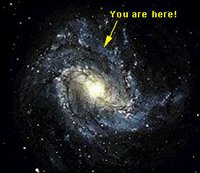
Considering that Planet Earth is actually quite small even within our own solar system (3) that there are billions of other galaxies and countless billions of other stars, planets and God only knows what else 'out there' then the contemporary outlook of reigning in human aspiration and minimising our footprint on the world is pathetic. lt's safe to assume that we are alone in the universe - it's our universe just as much as it's our world. 


Human beings are the unique product of naturally occuring events specific to Earth's composition and existence in time and space - 4,550,000,000 years, a tilting axis, hurtling through space in an expanding universe, etc. The Universe as much as natural life on Earth operates to no plan and unless a planet has evolved under the exact same circumstances then there is nothing else out there remotely like us. 
I'd go as far as to suggest that the 'sci-fi community' and their search for intelligent extra-terrestrial life is merely pseudo-scientific wishful thinking to find answers about ourselves and replacement for religion. Both are human constructs. 


Our ability to understand things has not been God-given. We are The superior being; we stood out from the rest, developed to the point of being able to understand everything else and to make it fit for our purpose.


In the unlikely event that humanity disappears - choose from any 'popular' scenario be it a colliding asteroid, avian flu, nuclear war, climate change, the slow death of lowered horizons, etc, etc, etc - then what we call Mother Nature will, over time, eradicate all traces of our existence on the surface leaving only fossilised remains, artefacts, etc that nothing else will have any interest in. 'Mother Nature' will carry on as it always does - organisms will develop that can survive and thrive in certain conditions and evolve into other creatures - unconcerned, no game-plan, no sigh of relief and no possible means of comprehending events; arbitrary. Knowledge would exist at the level of primal intuition and history would have no basis until intelligent life resumed.


Should the ultimate prophecies of eco-miserablists prevail and, God forbid, we 'destroy the whole planet' that again in the grand scheme of things would only ever matter to the human race. Really, it seems, we are talking about life in our time, for us and ours. Nothing else can mean anything unless we reclaim a progressive view, can project ourselves forward and make things fit for a better humanity - above all else.


Today ideas of human progress are severely limited. Environmentalism now the mantra and humanism its nemesis. Like most creatures just by existing we impact upon that that occupies the same space. Every step we take impacts on some aspect of life yet creates as much by accident as it destroys. Like new growth after fire, oilspill, earthquake then our footfalls or even scratching an itch wipes out life forms but creates space for new life to flourish.


Plain fact is our bodies teem with life-forms other than our own (4) -


'Of the trillions and trillions of cells in a typical human body — at least 10 times as many cells in a single individual as there are stars in the Milky Way — only about 1 in 10 is human. The other 90 percent are microbial. These microbes — a term that encompasses all forms of microscopic organisms, including bacteria, fungi, protozoa and a form of life called archaea — exist everywhere. They are found in the ears, nose, mouth, vagina, anus, as well as every inch of skin, especially the armpits, the groin and between the toes. The vast majority are in the gut, which harbors 10 trillion to 100 trillion of them. “Microbes colonize our body surfaces from the moment of our birth. They are with us throughout our lives, and at the moment of our death they consume us.” (5) Eeeeuww indeed . . .
Which kind of makes trying to preserve every bug and critter's habitat intact a non-starter.
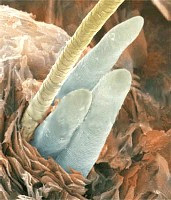
Environmentalism severely impedes 'boldly going' - at present no end of development projects are being held up on the say so of misanthropes. Anything from vast damming projects to telescopes (6), Arctic drilling and so on. Such things would have an impact on the lives of millions immediately and billions far off into the future. The last one particularly gets me - explorative drilling stopped because the lubricant could contaminate an unknown environment. But then that one opening provides a treasure chest of discovery and yes the environment will change - we'll be there poking, prodding and cataloguing anything that moves.
Otherwise we prolong the day of understanding or lose the opportunity entirely.


What next? Space exploration stopped because we may harm possible habitats of beings unknown, infect them with our germs? What if . . . . the world is ultimately doomed? Do we meekly hope that reducing, reusing and recycling our carrier bags we could prevent it? This static, orderly, textbook world of ours where everything fits neatly in a box . . .

Every creature 'contaminates' its environment. For it to exist there has to be something to sustain it and things of itself it leaves behind. In the UK there are efforts to make a more 'British' wildlife, to eradicate or curtail the march of invasive 'foreigners'. What period in history do we take as a starting point and where do you stop - Chinese Mitten crabs that threaten to erode the river banks, since the 30's (?) (and considered a delicacy), sunfish, dolphins, American crayfish? Rabbits, hares, mink? Do we bring back the boar, bear and wolf? What about migrating birds leaving 'exotic' seeds in their droppings?
ln truth nature knows no national boundaries and neither should we - national or natural.


Any creature new to an environment sinks, swims or gets out of there. Likewise the weed. Wheras nature merely adapts to itself we can adapt endlessly, bring in ideas from any angle, transform things and increase knowledge. Whenever the world does 'go' - a catastrophic 500 years or we may just squeeze another couple of billion out of her - everything else that matters goes with it should humanity decide to rein in aspiration. All life would have been meaningless . . pff.
Nothing else can do anything about that. 


Really shouldn't we be considering bombarding planets with bacteria, etc that could form the building blocks of life? Future generations may be better grateful for that than us cowering before an uncomprehending and everchanging nature.


On the eighth day . . .


Human comprehension of the natural world not only benefits ourselves but also that being studied. Karl Marx remarked that one day food may be produced in the laboratory and recent advances in agro technology, sport and medical supplements certainly point that way (it's assumed he didn't mean Quorn). Over time foodstuffs could be developed to feed all of God's little creatures so that they don't have to eat each other and nature exist in sweet harmony. Which is nice but then it would cease to be nature and we've better things to do.


A more enlightened humanity could unravel planetary physics, possibly manipulate or even re-engineer them to create idealised environments - get to grips with the secrets of the universe and extend them further. Of course something of the sci-fi/religious there but consider the manpower and effort going into destructive technologies then surely that could be put to positive use? Perhaps something of turning tanks into ploughshares and naive but given the justifications for war and the lack of direction in the west it just might fly. (7)


Current global figures for military spending are to the tune of $950 billion with the US on top at $466 billion (8). How much of this represents a true figure is unknown but, despite the conception of the good ol' US deemed to be an all out military machine, that comes out of an economy operating to the tune of over $2 trillion. Depending on how well you know your 'illions that is a lot of money and suffice to say there's plenty of other things going on in America.
Although merely seeing this as a redistribution of finances is perhaps the wrong way to consider. More concerning is the effort, ingenuity and resources that goes into devices to kill people or restrain them. Seeing that put to constructive use and more people free to prosper and develop opens vast new horizons. This can't be done without viewing humanity in a more positive, universal and expansive light. Today's ideas of treading warily, overcrowding and overuse of resources do the opposite.


Weary old west?


lt came as a surprise to hear of China's involvement with Kyoto as it was assumed to be an expression of western political exhaustion. But perhaps 1.3 billion people with upwardly mobile aspirations will doubtless be good but ultimately bring pressures to bear on the State (and possibly the Isle of Wight . . )
It's probably safe to say that dynamism in eastern economies will encourage a greater worldview amongst our eastern neighbours and rising confidence. This at a time when the west offers little positive vision and all previous influential institutions are on shaky ground. Should for instance the Chinese leap ahead then hopefully this translates into new developments in science, technology and arts and a positive influence to the developing world (as yet a long way off as 'they' haven't fully ratified Google). lf the west only offers 'save the world' efforts and the east - development and prosperity and a loosening of the shackles - could there be any real contest?


Whatever does happen in the future it is highly unlikely that humanity will disappear. Society in one form or another sputters on as new events and movements arise. We've moved on from considering that the earth is flat but now mainstream western ideas seem to be in danger of sinking down the plughole.


lt doesn't have to be that way. Just as history is constantly being rewritten then neither is the future set in stone.


(1)www.cia.gov/cia/publications/factbook/geos/xx.html
(2)www.geocities.com/heartland/valley/8414/china.htm
(3)Google search Universe, solar system, Galaxy, etc.
(4)www.nationalgeographic.com/ngm/9812/fngm/index.html
www.andrewlost.com/hair_k1.htm
(5)www.nytimes.com/2006/08/13/magazine/13obesity.html?pagewanted=2&ei=5087&en=091c29f788379524&ex=1171771200&excamp=mkt_at4
(6)www.spiked-online.com/index.php?/site/article/1573/
(7)www.battleofideas.co.uk>

NIMBY


Whilst there is no objection to the developer building (particularly as he is a generous donor of a football team once 'hung around' with . . ) it’s more that we should be a bit more selfish about what goes on in our backyard. After all our houses have considerable influence in our lives and possibly set to be even more so. Therefore isn’t it timely that we consider what informs house building practice and its relevance to us?


*

This open letter forms the basis of an objection to planning application No. 06/99/484444/B - an outline proposal for the development of 27 apartments, off Millfield Road on land previously used as factory space.

This is a NIMBY complaint and deliberately so, although it aims for a wider remit. Versions of this letter will be widely dispersed and a housing survey is forthcoming.

As yet this letter forms no public campaign. Given the choice the local community would likely prefer housing instead of a working factory and all its busy comings, goings and 'intrusions'. Why not do everyone a favour and move the remaining industry to the ex-Bombardier works?

This objection is based on the notion that this type of housing and its siting is unnecessary, overpriced, old hat, based on false premises and represents a disservice to us, the taxpayer, and the wider community. More so than that, it neither bodes well for the would be occupants nor the notions behind it for the economy paying for it.
Overpriced rabbit hutch housing plus an economy aiming for diminished wants, the creation of erstatz heritage and legalised community.

Unnecessary because there is no actual shortage of land - merely a question of how it is used as a resource. In supposedly overun Britain we are merely 12% 'built", the rest - 75% Agriculture, and the other 13% preserved, relic and other.
'Other' including such gems as The Yorkshire Dales National Park. Something of a favourite of mine. Wide valleys carved by glacier , natural forestry removed for sheepfarming and early source of Yorkshire prosperity, inclusive of many a ruin of earlier occupation, development and industry; erratics and other features. Now, farmed and preserved in some incoherent view of history.

Constant gains in agriculture mean that what we view as a traditional farming landscape is obsolete - a romantic idyll; a man-made, inefficient patchwork, and all supported by the taxpayer.

Ah, the taxpayer!
5% of the population in this way own 95% of the land, the EUs farming budget eats 40% of the total and we live in old and/or expensive houses.

Even the Royal family receive farming rebates (of one form or another) and farmers are paid compensation to leave land to return to the wild.
Telling figures - African farmers receive $200 conditional subsidy per year whereas european cattle are subsidised to the tune of $937. Here too domestic influence is reflected by its continental counterpart and the vision of restricted development for what is ironically refered to as the developing world.
A developing Africa would unlock huge land and other natural resorces/raw materials. That is if it shakes off the white man's burden in the phantom of sustainable development.


Back home.

At home this deliberate restriction of land means that prices are unnecessarily high and for what can be poor quality. And the resultant houses and landworks 'jerry built' as what is known as The building lndustry goes gung-ho to make its rapacious gains.

l don't think they're rapacious enough. Design criteria and density regulations mean that they are forced to operate within narrow confines and UK design and build though capable of remarkable things is largely haphazard at best but outmoded and inefficient in the main.
Bearing in mind the central role that housing plays in the economy methinx this doesn't bode well for the long run and Britain will be outpaced by external developments.

This at a time when there is plenty of room for maneouvre but just a niggardly view of our impact on the environment. As such it displays intellectual bankruptcy, moral cowardice and a lack of will.

Practical objections to this proposed development are the quality of land and accompanying infrastructure that is archaic and overburdened - this in 'affluent' Horbury.
This type of build needs rejecting everywhere as an unneccesary intrusion and the developments returrned to open areas, parkland and amenities - living room.
My own pet project is landscaped parkland down to the riverfront. Perhaps a floodplain bay area and boathouse.

There is neither a genuine objection to housing going on any of this land. l'd be happier if experimental forms in housing were tried, maybe with landscaping; either as temporary exhibition and showcase for UKs latent design capacity and to act as fillip for industry.

Perhaps it's worth considering how we live positively affects further innovation and development.

Coxley Valley is a local area of some 'natural' beauty and is an attraction for many. But anything special? Other than mud, trees, babbling brooks, wildlife and swooping farmland, not really.
Officially it's use is limited yet it has long been a playground for the rambler, cyclist, dogwalker and dambuilder - we do like the countryside and many of us dream of living nearer or in it. And why not? Coxley Valley could support some highly desirable residences and very nice locations; or perhaps landscape more Coxleys with housing.

A transitional program could see the destruction of swathes of old stock housing, bulk modernisation of others with more open spaces and a rebuild program. Newer developments in housing, urban and rural planning could also reinvigorate road and transport design and drive the UK out of its demoralising slumber.

A huge undertaking? Possibly so, but the UK, for whatever reason, still features large in the world. Apart from the negatives there is the 2012 Olympics, the possibility of a World cup and who knows what else in the pipeline?

Friday, April 21, 2006

Many happy returns of the day . .


. . . Elizabeth, my dear.

l wouldn't want to spoil the party as obviously many of us enjoy the pageantry of the Royal occasion and it is a birthday after all. Although figures are set to change it seems that 'a reasonable crowd of some 20, 000 came to cheer the Queen and some '17,000 emails and 20,000 cards' were sent. Not to mention how many other countries, associations and individuals are duty bound to honour and promote this spectacle.

ln footballing terms that's pretty crap. An average side in the championship/premiership commands that (and is vastly more entertaining) and the original march against the war in lraq drew a sympathetic crowd of 1-2 million. As institutions go monarchies nowhere near get the attention, affection or passion of, say, football or even politics. The assumed collective 'we' - the people may have an affection for our monarchs and their charmed lives. A fact that will be beamed around the world and appear endlessly on TV and in the press. One young girl from West Yorkshire spoke affectionately of meeting the Queen (before and after as it seems), England football fans sing the national anthem (although am not sure whether it's all the way through - yet), etc, etc. (and quite possibly we wonder what it's like to lead such a pampered life).

Her majesty even drew a crowd out in Wakefield where she distributed maundy money to the deserving. At the time it caused something of an outcry in the local press when a set or two was sold off for some £70 (someone obviously preferring the real thing) and Mick Griffiths of the Socialist Party getting arrested for attempting to shake a collecting box in front of the Queen.

Our figureheads are not what they seem. The loyal and faithful cling on and attend to the duty of serving and promoting privilege whilst all around we, the people, see our jobs cut, wages curtailed and many a barrier put in the way of getting on with our lives - often by the same people.

But then, as Queen, Elizabeth Windsor must have a particularly awkward life. Sure the holidays, homes and retainers, etc is likely fantastic, but the endless formality, dutiful appearance and fawning attention must take its toll. Although given now that the Royal family are discussed in terms of tourist revenue as much as anything else it could be considered nice work if you can get it.

l associate myself with a tradition that had its Royal family executed and mashed up their bones. Although that was a long time ago and may have been grudge motivated. Our Royals don't serve the same function as the Romanovs did and merely rubber stamp the nations approval.

What is objectional is that normal people - the doers and makers - are treat so shabbily and this empty institution is upheld and paraded before us as something holier than thou and worthy of maintaining.


See/hear also -

BBC radio 5 live coverage
Most local press

www.amazon.com/gp/product/B0000687F4/103-8178019-9456643?v=glance&n=130